
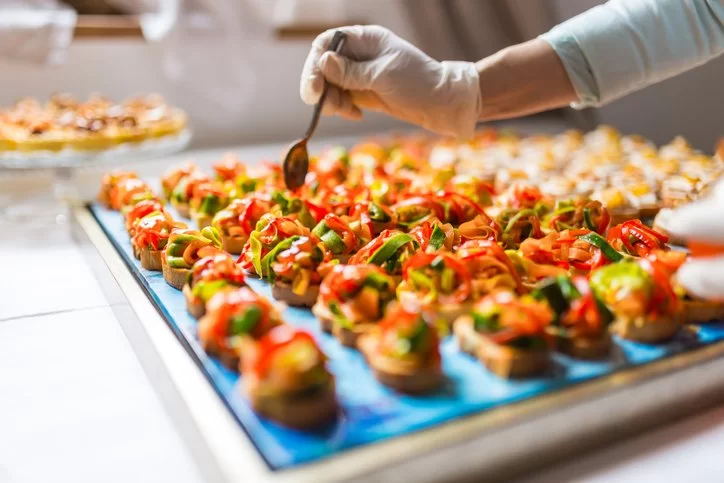

Executing a successful buffet is one of the greatest operational challenges in the catering industry. Unlike a plated dinner where food moves directly from the kitchen line to a waiting guest, a buffet requires food to remain appetizing, visually appealing, and safe over an extended period. To the untrained eye, a buffet looks like a simple self-serve arrangement. Behind the scenes, however, it is a highly calculated exercise in thermodynamics, food science, and crowd management.
When food sits in a buffet line, it fights two constant enemies: temperature loss and moisture depletion. If a dish gets too cold, it becomes a food safety hazard; if it stays on a heat source too long, it dries out and turns unappetizing. Professional caterers rely on a combination of specialized equipment, meticulous planning, and culinary chemistry to ensure that the last guest in line enjoys the same quality of food as the very first.
The Golden Rules of Temperature Control
The primary objective of any caterer is keeping hot food hot and cold food cold. According to strict food safety regulations, hot food must be maintained at a temperature of one hundred and forty degrees Fahrenheit or higher, while cold food must remain at forty degrees Fahrenheit or lower. This spectrum between forty and one hundred and forty degrees is known as the food danger zone, where harmful bacteria can multiply rapidly.
To maintain these strict standards without ruining the texture of the food, catering professionals employ several advanced heating methods.
Chafing Dishes and Induction Heaters
The traditional stainless steel chafing dish remains a staple of the catering world. These units use a water pan heated by a fuel canister to create a gentle, surrounding steam jacket around the food pan. This indirect heat prevents the bottom of the food from scorching.
Modern high-end catering has largely shifted toward induction heating elements. Induction units use magnetic currents to heat the serving vessel directly, providing precise temperature control down to a single degree. This eliminates the hot spots and unpredictable heat drops associated with traditional gel fuel canisters.
Heated Holding Cabinets
Before food ever makes it to the display table, it resides in insulated, mobile holding cabinets often referred to as hot boxes. These cabinets use precise humidity controls alongside heat. By injecting controlled amounts of moisture into the air, these units ensure that roasted meats, baked pastas, and poultry remain juicy during the gap between production and service.
Combating Moisture Loss and Texture Degradation
Even with advanced heating equipment, food left over a heat source naturally loses moisture through evaporation. Catering chefs use a variety of strategic culinary techniques to design menus that are inherently resilient to the buffet environment.
Sauce Selection and Culinary Architecture
You will rarely see a delicate, emulsion-based sauce like a traditional Hollandaise on a professional buffet line. These sauces break down and separate when exposed to prolonged heat. Instead, caterers opt for stable, starch-thickened sauces, veloutés, or reduction glazes that hold their structural integrity.
Meats are often served resting in a shallow bath of jus, gravy, or braising liquid. This liquid acts as a thermal buffer, shielding the protein from direct heat while continuously replenishing lost moisture.
Strategic Starch Management
Starches are notoriously difficult to keep fresh on a buffet. Rice can quickly dry out into hard grains, while mashed potatoes can form an unappetizing skin on top. To combat this, caterers fold extra fat, such as heavy cream, butter, or sour cream, into mashed potatoes to seal in moisture. Rice dishes are often cooked with a slightly higher ratio of oil or broth and kept tightly covered until the moment of service to trap steam.
The Power of Batch Cooking and Rapid Rotation
The single most effective secret to a fresh buffet is not the equipment used, but the logistics of food production. Exceptional caterers abandon the practice of cooking all the food at once and instead rely heavily on batch cooking.
Instead of deploying a single giant pan containing one hundred portions of grilled salmon, a kitchen team will prepare five smaller pans of twenty portions each. The pans are cooked in staggered intervals throughout the event. This strategy guarantees several distinct advantages:
-
Food spends minimal time sitting under a heat lamp or in a chafing dish.
-
The presentation remains neat, as messy, half-empty pans are constantly replaced with fresh, pristine displays.
-
Kitchen staff can monitor guest consumption rates in real time, adjusting the final batches to minimize food waste.
Layout Mechanics and Guest Flow
The physical arrangement of a buffet line directly impacts how fresh the food stays. If a buffet line crawls at a slow pace, the food sits open to the room air longer, accelerating cooling. Caterers design the layout to optimize speed and efficiency.
Plates are always placed at the very beginning of the line, while silverware and napkins are placed at the very end. Forcing guests to balance cutlery and napkins while trying to serve themselves slows down the entire progression.
Furthermore, expensive or temperature-sensitive proteins are typically placed toward the end of the line. This ensures guests fill the majority of their plates with starches, salads, and side dishes first, while the premium hot items are scooped up immediately before the guest walks to their table, reducing the time the protein spends cooling down on the plate.
Equipment Profiles for Professional Buffets
| Equipment Type | Primary Function | Best Used For | Key Advantage |
| Induction Cooktop | Direct, precise heating | Live cooking stations, delicate sauces | No open flame, exact temperature control |
| Fuel-Powered Chafing Dish | Indirect steam heating | Stews, pastas, roasted vegetables | Highly portable, requires no electrical outlets |
| Insulated Hot Box | Pre-service holding | Bulk proteins, roasted potatoes, breads | Retains internal humidity to prevent drying |
| Carving Station Heat Lamp | Top-down radiant heat | Prime rib, whole turkeys, roasted hams | Maintains surface crispness while displaying food |
| Eutectic Cold Plates | Sub-surface cooling | Seafood bars, sushi, dairy-based salads | Keeps items chilled without the mess of melting ice |
Frequently Asked Questions
How do caterers keep fried food from becoming soggy on a buffet?
To keep fried foods crisp, caterers avoid deep pans that trap steam underneath the food. Instead, they use shallow, perforated pans that allow steam to escape. They also utilize overhead infrared heat lamps rather than bottom-heated chafing dishes, as radiant top-down dry heat preserves the crunchy exterior texture.
How long can food safely remain on a buffet line?
According to standard health department guidelines, perishable food can sit on a buffet line for a maximum of four hours, provided that hot food stays above one hundred and forty degrees Fahrenheit and cold food stays below forty degrees Fahrenheit. If the food drops into the danger zone, that time limit shortens significantly.
What is the purpose of the water pan in a traditional chafing dish?
The water pan prevents food from burning. The sterno flame heats the water to a boil, creating steam. This steam evenly distributes heat across the bottom of the food pan above it. Without the water pan, the direct flame would scorch the center of the food pan and leave the edges cold.
How do caterers prevent a skin from forming on top of soups and gravies?
A skin forms when moisture evaporates rapidly from the surface of a thick liquid. Caterers prevent this by keeping lids on the soup wells as much as possible. When the lids are off during service, staff members frequently stir the liquids to reintegrate the surface layer and maintain a uniform temperature throughout the vessel.
How are delicate green salads kept crisp during an outdoor summer event?
Caterers use a double-vessel system for cold items. The serving bowl containing the salad is nested inside a larger bowl filled with crushed ice or draped over hidden eutectic cold gel packs. Additionally, dressings are kept on the side, as salt and acids wilt delicate greens within minutes of contact.
Why do caterers prefer smaller serving utensils on a buffet line?
Smaller serving utensils encourage guests to take modest portions, which keeps the line moving quickly and prevents individual plates from becoming overloaded. From an operational standpoint, it also prevents guests from accidentally dropping large amounts of food back into the pans, which ruins the visual presentation and creates structural messes.